


Happy World Introvert Day!
When I was writing my book, QUIET: The Power of Introverts in a World That Can’t Stop Talking, I kept thinking of Betty Friedan’s famous book, THE FEMININE MYSTIQUE, which she wrote in 1963. That book touched a nerve; then it sparked a flame. After its publication, the shelves filled with books exploring the situation of women in society. Now you can walk into any bookshop and find a whole section devoted to this subject.
That was always my vision for QUIET, and I’m thrilled to say that this is exactly what seems to be happening.
Here’s the latest evidence from the Wall Street Journal: an article talking about the many advocacy and other groups that introverts have formed within their companies and organizations - for example, a “Valuably Quiet” program at Bristol Myers Squibb - which created discussion panels and resource guides, and even resulted in the company creating a recharge room for introverts.
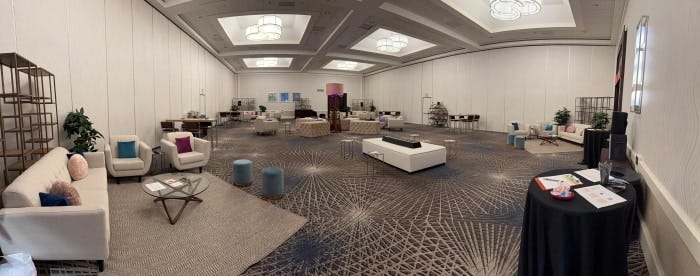
(Note: I actually think that everyone - introverts and extroverts alike - needs a recharge room; our performative work culture is too much for almost all humans.)
I’ve been hearing about these kinds of corporate groups for years (and am often invited to speak to them, at companies like Amazon and L’Oreal), and am so excited to see this phenomenon getting widespread attention.
If you’re an introvert in a company or organization: please, consider starting your own such group!! (Incidentally, it’s a great way to gain leadership experience around an issue you truly care about.)
*
Also! My dear friend Jeri Bingham is sponsoring a free online event later today, on the subject of “Introversion Across Generations: Success at Every Level.” You can register below.

*
If you work or have worked at a company or organization, I’d be curious to know how well you think your company addresses the needs of introverts and extroverts alike.
*As an introvert or extrovert, what suggestions do you have for employers? Many employers I speak to are sincerely interested in learning more about this topic, so please do share!
*On the topic of “introverts at work,” what do you think is the #1 area for improvement?
As I sat with a couple of friends the other day, I told them that one of the things I would so love is to have Quiet Restaurants. The emphasis would be to have spaces where sound is muffled instead of amplified, where drinking coffee, eating, and talking take place in atmospheres of quiet.
When I started as a programmer, we had small offices with 2-3 people, each with at least 9 square meters of space per person, including shared areas, as IBM recommended.
Over time, we imported the idea of open office space from the US. Managers loved it because they could better control what was happening, while higher management saved money on office space.
Business consultants taught us to mix workers from different departments. This immediately downright killed the productivity of knowledge workers (software developers and architects), while the supporting acts (marketing, product and product management, and support) loved it. They used their phones, producing sounds that disturbed those who had to think to produce, and even made it impossible to work from 9 to 5.
At the same time, line managers were moved into private offices but told to maintain an open-door policy. Thus, the private office became a status symbol rather than a productivity tool.
For me, as an autistic introvert, work became hell, em, suboptimal—like many things we imported from the US. When COVID-19 hit, and companies allowed for remote work, I so hoped this would stick. If only managers did not need control ...