


“When strangers are randomly assigned to go straight to deep talk rather than small talk, they have a better vibe and end up feeling happier and closer than expected. Although extraverts and introverts get the same joy out of going deep, it gives introverts a bigger boost in connection.”
So says Adam Grant — organizational psychologist, #1 New York Times bestselling author of 6 books that have sold millions of copies, and friend of The Quiet Life.
In his brand new book, VIBE: The Secrets of Strong Connections in a Lonely World, Adam teaches how both introverts and extroverts can accelerate connection - even with people they’ve just met.
Adam has graciously offered to share an EXCLUSIVE excerpt from the book with us, focusing on how to develop a meaningful connection within one minute of meeting someone — by learning the secrets of deep talk.
Here’s Adam, from his book Vibe:
“I’m watching over a hundred students fidget nervously. It’s the second week of class, and I’ve just paired each of them up with someone they’ve never met. They have one minute to see if they can vibe.
That’s the only instruction I give them. When I shout, “Go!” no one says a word. They just sit there, frozen, until a brave soul finally pierces the uncomfortable silence with pleasantries. Then the voices swell into a cacophony. I can’t make out any sounds or read their lips.
Later, I ask them to close their eyes and raise their hands if they’ve managed to form a strong connection. More than three quarters of the hands shoot up. Since then, I’ve done this exercise with thousands of people. It doesn’t matter where you live or how old you are. In just 60 seconds, the right ritual can light a spark.
This activity was created by my mentor Jane Dutton, a leading expert on high‑quality connections. We’ve both run it with people of all ages, and they’re usually stunned by their capacity to click with strangers in only one minute. They don’t know they have an intuitive understanding of how to talk their way to different wavelengths.
Some pairs look for compatible needs or goals. What’s your biggest challenge right now? Others search for shared passions and hobbies. What’s your ideal way to spend a weekend? The most frequent and surprising approach, though, is to dive right into the deep end. What role does love play in your life?
There have been many studies about how to accelerate closeness. In the most famous experiments, after just 45 minutes of conversation, strangers end up feeling a strong connection—and maybe even falling in love. This “fast friends” procedure starts with fairly benign questions. Would you like to be famous? How would you describe a perfect day? Then the questions get increasingly personal and intense. When did you last cry? How do you feel about your relationship with your mother?
This “fast friends” procedure starts with fairly benign questions. Would you like to be famous? How would you describe a perfect day? Then the questions get increasingly personal and intense. When did you last cry? How do you feel about your relationship with your mother?
These studies show that short, emotionally intense conversations with strangers can foster strong connections. It takes less time than we expect to advance from small talk to deep talk. But it’s possible to skip the small talk altogether. That’s what my students have learned in the rapid high‑quality connection exercise. The short window of time—plus the knowledge that they share the motivation to bond—gives them permission to be vulnerable and go deep right away.
Sure enough, when strangers are randomly assigned to go straight to deep talk rather than small talk, they have a better vibe and end up feeling happier and closer than expected. Although extraverts and introverts get the same joy out of going deep, it gives introverts a bigger boost in connection.
It’s true that if you botch deep talk, you sometimes end up with no talk. Yet these fears are mostly misguided. An analysis of 57 experiments demonstrated that people actually like us better when we show some vulnerability—it displays our humanity and signals that we trust them. My own research has shown that when we disclose a flaw, admit a mistake, or reveal some genuine emotion, others tend to respond favorably.
What moves the needle is a disruptive disclosure: an unexpected communication that leads us to rethink our assumptions about a relationship. By jolting us out of our existing rituals, it can alter the trajectory of our interactions.
A disruptive disclosure is not a license to trauma dump. A trauma dump is when people pour out their pain without seeking consent or showing concern for the listener’s boundaries and well‑being. It’s unfiltered and self‑centered, and it can send the listener running in the opposite direction. A healthy disclosure is different. It involves bounded vulnerability. You’re revealing your humanity without being dysregulated or demanding support. As psychologist Susan David captured it for me, “Share from your scars, not from your wounds.”
One of the best disruptive disclosures I’ve ever seen was on a college tour with my daughter Joanna. We were trudging through muddy piles of melting snow, but she hardly noticed because she was absorbed in a conversation with our tour guide, Natalie.
As they discussed the sense of community on campus, Natalie said she had a story that would bring it to life: “A few months ago, my grandma died. Don’t worry—I’m okay. This isn’t a story about me; I want to tell you how people here showed up for me.” Natalie was amazed by the care that her friends displayed. For weeks, they reached out to her multiple times a day. They didn’t tell her until much later, but they’d created a group chat to coordinate their check‑ins and let her know that she wasn’t alone. Natalie divulged something personal without seeming needy or burdening us.
That’s what made it a beautiful disruptive disclosure. The topic was vulnerable, but she didn’t burst into tears or pressure us to console her. She shared her experience and signaled to Joanna that she could be real too.”
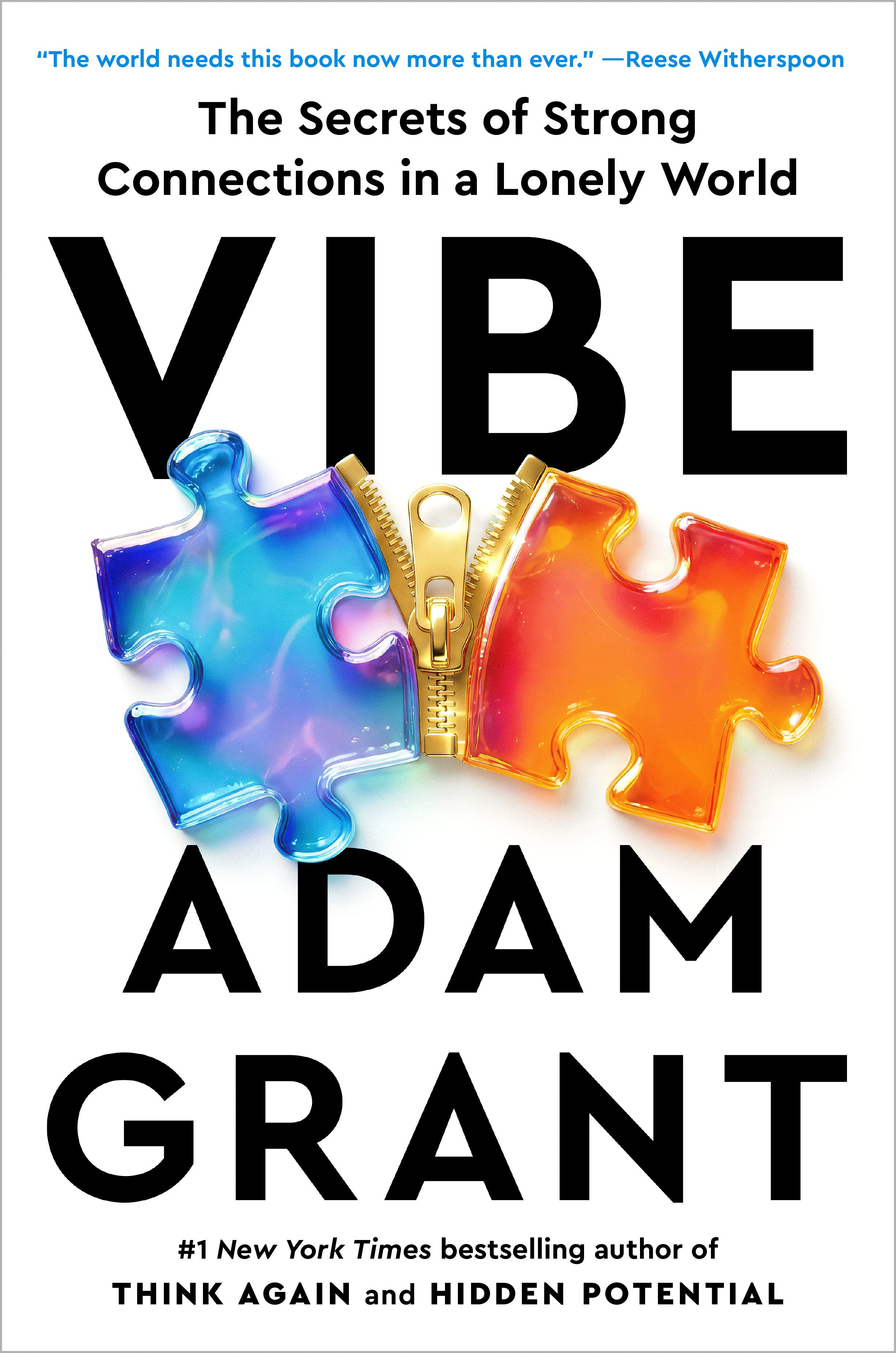
*
Okay, this is Susan again.
I hope you enjoyed this excerpt as much as I did. I loved Adam’s ideas for conversational gambits that launch us straight into deep talk.
I’ll recap some of them here, so you have them in one place:
What’s your biggest challenge right now?
What’s your ideal way to spend a weekend?
What role does love play in your life?
Would you like to be famous?
How would you describe a perfect day?
When did you last cry?
How do you feel about your relationship with your mother?
Granted, some of these feel more appropriate for some situations than others. But I think they give a great idea of how to bypass small talk altogether.
*
How about you? Would you like to share with us:
*A time when you made an immediate connection with someone — and what made it happen?
*How you avoid small talk and move into deep conversation?
*Whether you think it’s possible to LEARN how to make a good connection, or whether you see it as a natural talent?
We always love to hear from you! Please, comment below, and feel free to share this Kindred Letter if you found it helpful:
I love love love this topic. And isn't it interesting that we know how to go deeply quickly when given the instructions. In the past, I have sometimes gone too quickly with this ....it takes pacing and sensitivity, I think. And it can be a moment of depth that you both acknowledge with no expectations for anything more or in the future, but no less valuable. It is a moment when my soul sighs, takes a breath, feels seen and heard, and calms for a moment. And I hope to give the same to others. Even with more surface conversations, I think that the intention and manner of paid attention can contribute to depth. I can ask how someone is, they can give me an answer with a hint of something deeper, but not want to go into in at the moment, and I can acknowledge that I heard and saw them, and respect their timing. Seeing someone also means seeing their boundary and vulnerability and respecting that in the moment, while letting them know that you are there if they wish to share more. Even the quality of eye contact and facial expression can signal I am here if and when you may be ready to share more, and I see and hear you and wish you well.
I'm so happy that Adam connected us Susan! In addition to our conversation, at the conference I also talked with Charles Duhigg, Erica Dhawan, and Vanessa Bohns about how the quality of our conversations (and our questions) is so important if we truly want to connect with our 'kindred spirits,' as you always say. It's why us deep thinkers hate small talk so much!
A running theme through all of these conversations was that vulnerability is what often brings us closer. The more we are willing to drop our guards and share things that are more human, the faster we really connect. This is something Adam talks about in Vibe as well.
If it's helpful for introverts, another trick that helps us overcome the fear of reaching out is thinking about connecting with others as an act of service. How can we show our admiration for someone's work so they feel seen? How can we ask better, deeper questions so they can tell stories about themselves and feel heard? And if/when the time comes, how can we share our challenges with them and ask for support so they can also feel useful to someone else?
Another one of my amazing speakers, Jayson Gaignard (author of 'Community Made') said he's TERRIBLE at asking people for help. I too am guilty as charged. But he realized he's missing an amazing opportunity to connect with others because we love helping people. And being helpful allows us to be of service to our kindred spirits. That was a big 'a ha' moment for me that is perhaps helpful for your readers as well.