


Have you ever come across the term — and concept — of SIMIs (the Seemingly Insignificant Minor Interactions of Everyday Life)?
If you’re an introvert, especially, you might not be inclined to pay much attention to these interactions. You might (as I am) be inclined to focus mostly on your deeper relationships. And I do believe that going deep, relationally, is a deeply satisfying way to live.
But I like the concept of SIMIs too - the constellation of minor interactions that round out our days. To recommend paying attention to SIMIs is not to urge us to be more social than we actually want to be; it’s more akin to stopping to notice a flower or cloud formation.
I came across the concept of SIMI’s from a new book by internationally bestselling author Dr. Amir Levine, called Secure: The Revolutionary Guide to Creating a Secure Life. Dr. Levine is an Associate Professor of Clinical Psychiatry at Columbia University Medical Center whose patented findings hold potential for innovative treatments for psychiatric disorders in adolescents and adults. And I’m so happy to have the chance to bring an exclusive excerpt of the book to you, right here.
Here’s Dr. Levine:
“One August morning, Ava’s husband collapsed on the floor. All attempts to resuscitate him, first by her and then by the Emergency Medical Service that quickly arrived at the scene, failed, and he was pronounced dead from what appeared to be a massive heart attack. For a long time, Ava couldn’t comprehend it. One moment they were having breakfast, sipping coffee, and talking about the news, and the next, he was gone. Sometimes she would wake up and instinctively look over to her husband’s side of the bed expecting to see him. Other times she thought she heard him coming up the driveway or walking softly about in the next room, only to remember that he was gone and sink into despair. She was full of sadness and anger and often just felt numb, disconnected from the world she had always known. Days went by without her doing much of anything. It didn’t help that they lived in a small town where everyone knew them as a couple.
One day, Ava decided that she needed to change her environment if she was ever going to overcome her grief; she simply couldn’t stay in their home anymore. She packed up and moved across the country to a quiet neighborhood lush with gardens and greenery. Each morning, she woke to the sound of birds chirping in the backyard and would lie in bed watching rays of sunlight peek through the trees.
After a few weeks, Ava decided to visit the nearby community center. A yoga class was about to start, and she surprised herself by joining. As she moved through the asanas with the others in the class, she found herself breathing into the challenge as the yoga teacher instructed. And it helped her feel a little better. At the end of the class, a group of women greeted her. No one knew her history; they didn’t even ask. They were just nice for the sake of being nice, not because they felt sorry for her. It was a breath of fresh air.
They told her about other gym classes at the center that were worth attending and invited her to join them for lunch. She felt so welcomed and included. And that was just the beginning. Over the next few weeks, as she ventured out of her home more and more, Ava discovered the strangest thing. Everyone, literally everyone, she passed by waved hello and smiled at her. And it wasn’t just pedestrians; people passing in their cars all waved hello, too. The first few times she was thrown off. She even looked behind her to see if they were waving at someone else. But she soon realized this was the norm here. Even complete strangers greeted you in this community. A little time went by, and then one morning she woke up and was struck by an unexpected feeling — a spontaneous sensation of unexplained well-being and joy.
Unbeknownst to her, Ava had created an enriched environment for herself that helped her overcome her grief and heal. If you pay close attention to Ava’s story, you will see that her enriched environment consisted of many small interactions that on a day-to-day basis changed her life for the better. I’ve come to call these small interactions the seemingly insignificant minor interactions of everyday life, or SIMIs for short. What most people don’t realize is that our SIMIs, the ones that often escape our attention because we believe they are of little consequence, are actually of huge importance in the process of changing your brain and your life toward greater security.
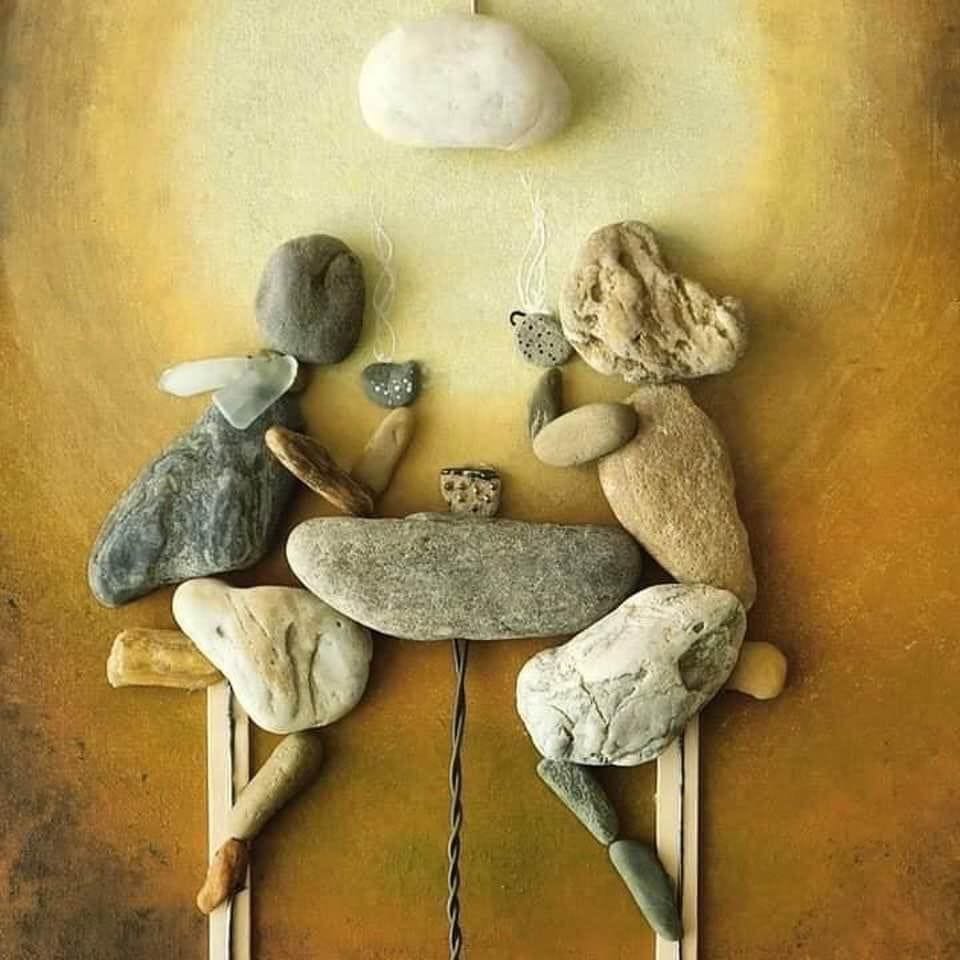
THE SEEMINGLY INSIGNIFICANT MINOR INTERACTIONS OF EVERYDAY LIFE (SIMIS)
Oftentimes when people seek professional help to overcome emotional and social difficulties, they think of sifting through their early childhood experiences with a therapist as the main vehicle for healing and change. Seldom do people pay much attention to the minutiae of their day-to-day social interactions. But from the point of view of the brain, the minor interactions we have with people not in the past but in our present, everyday lives — whether close allies, significant others, friends and family, or even just colleagues, acquaintances, or passersby on the street — can be a powerful avenue to achieving radical transformation. Change can, in fact, come from taking command of the SIMIs of everyday life.
Change can, in fact, come from taking command of the SIMIs of everyday life.
Neuroscience studies reveal that SIMIs have the potential to shape and reshape our brains countless times. They can either strengthen existing neurocircuitry or overwrite it to create new pathways. Positive SIMIs can provide us with the opportunity to heal past adversity as new experiences overwrite the old. But negative SIMIs can further solidify past relational experiences that did not serve us then and will not serve us now or in the future. Each positive SIMI is an opportunity for neuroplastic shift, which means that the right SIMIs have the potential to alter the brain on the most fundamental molecular level — helping you attain a richer, more satisfying life.
While most animals, driven primarily by instinct, have very limited control over whom they will interact with and how, human beings have a greater degree of freedom. In our society today, we don’t have to stay at a certain company or in a certain job, nor do we have to stay in relationships — whether romantic, familial, or platonic — that are harmful to our brain. We can remove ourselves from one social milieu and try our luck in another. And we can try to change a certain dynamic within an already existing social context; this, if successful, can result in dramatic improvements in well-being and happiness.”

OK, this is Susan writing again. I hope you enjoyed this piece as much as I did, and am very curious to know:
*Had you heard before of the concept of SIMIs?
*Do you take kindly to the idea, or does it feel to you like more urging to be more extroverted than you prefer?
*Note that Dr. Levine also recommends taking charge of which SIMIs constitute our days — and making changes to our daily lives so that we actually enjoy the people we meet. Have you ever made such a change?
Please do leave a comment—and join the conversation!
I actually don't see these interactions as seemingly insignificant. In fact, they sometimes, at least for me, can surprisingly go deeper than longer interactions, if we dare. I have felt nourished more at times by these brief moments of contact, genuine contact, than I would have expected. It really is not the quantity of time, but the quality. Sometimes a moment of genuine eye contact and really responding to "how are you?" can make my day. Sometimes a shared laugh at something witnessed can build an instant connection, as laughter can feel vulnerable. Sometimes just saying that we are struggling in the moment and having someone really hear that can be such a gift that sticks with you. When in my more introverted state of being, these briefer connections help sustain me when I cannot tolerate a longer time. They can be a lifesaver.
This concept reminds me of the book "Consequential Strangers" by Melinda Blau. How many small single or repeating interactions are important to feeling connected and in community with others, and how healing that is.