


When it comes to decision-making, are you more of a “maximizer” or a “satisficer”?
And what do these terms mean, anyway?
And why does the answer matter so much, when it comes to leading a rewarding life…and making good decisions?
If you’d like to know the answers to these questions, today’s Kindred Letter is for you. It’s a sneak-peek excerpt from my friend David Epstein’s brand-new, out-today book, “INSIDE THE BOX: How Constraints Make Us Better”. In case you missed it, earlier this month I republished David’s article: Why you choke under pressure. I hope you enjoy!
Here’s David:
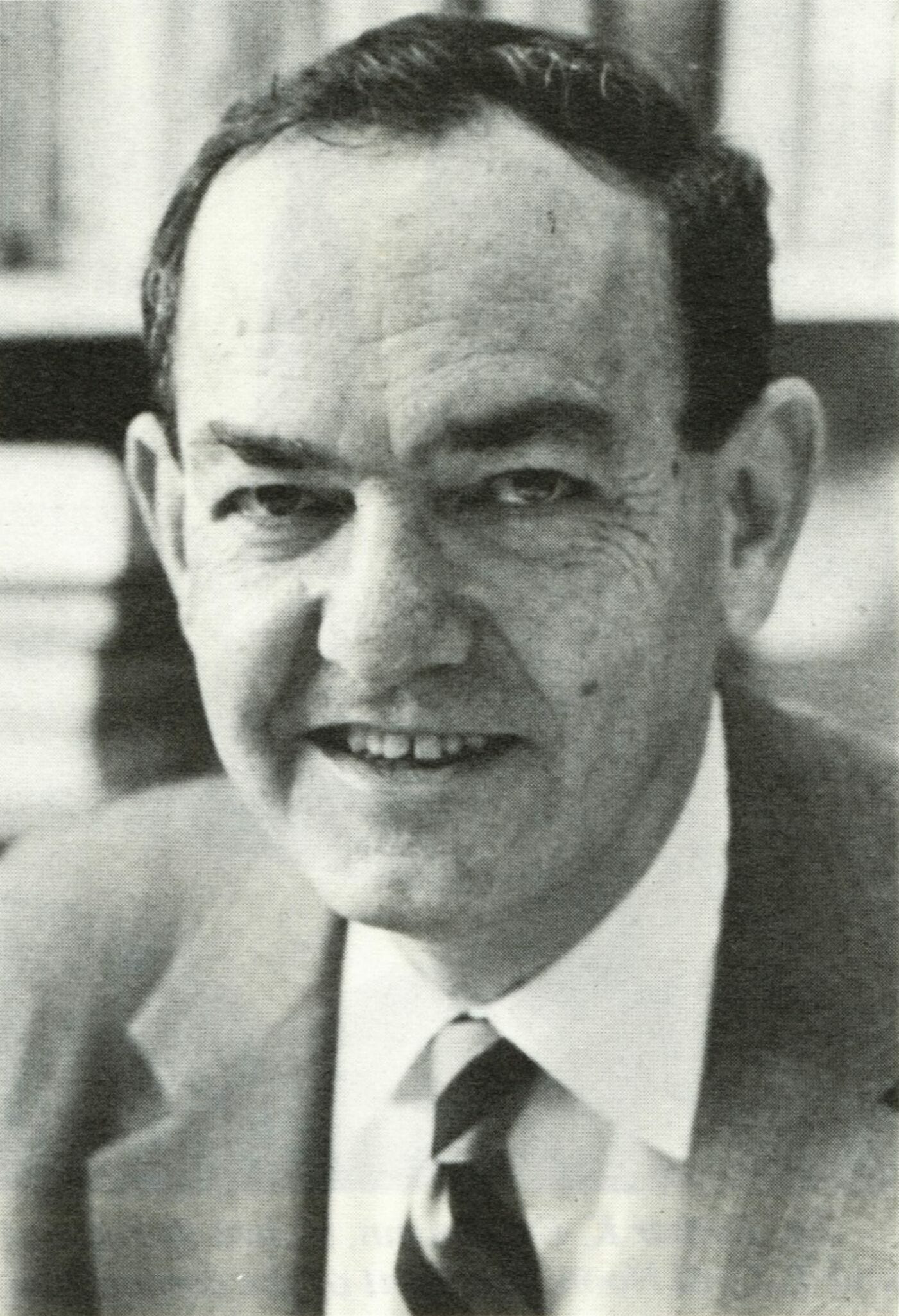
“If I had to choose a single thinker whose work most influenced this book, it would be Herbert Simon.
Simon was trained as a political scientist, but a handful of disciplines claim him. He won the highest award in computer science (the Turing Award), and in psychology (Outstanding Lifetime Contributions), and in economics—the Nobel Prize. When a graduate student once asked Simon to explain his mastery of multiple fields, Simon replied that he was actually just fanatically exploring a single topic: how humans make decisions.
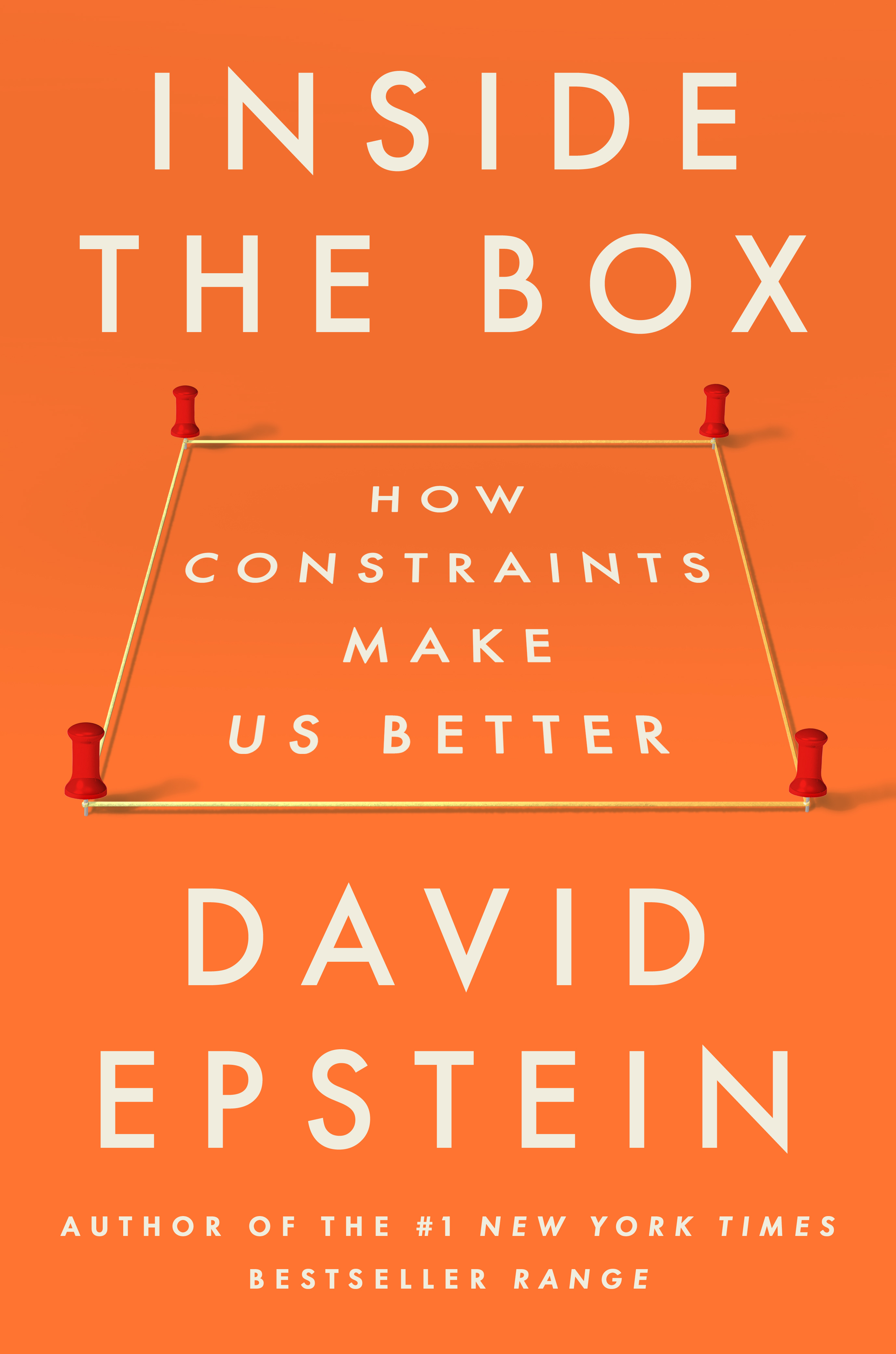
Simon showed that decision-making departs from what he had learned in economics courses because people are always faced with imperfect information about their options and equipped with limited ability to anticipate the consequences of their choices. Rather than “maximize,” or make the best choice from all available alternatives, Simon showed that humans must “satisfice”: consider a limited menu of options and choose one that is “good enough.”
Simon applied his findings in a practical sense to himself. He was, in his own words, an “incorrigible satisficer.” True maximizing is impossible anyway, and “searching for the best can only dissipate scarce cognitive resources,” Simon wrote. Here is his eldest daughter, Katherine, recalling his lifestyle:
“He wore one brand of socks, thus, after the first purchase, never having to select the color or style of what he put on his feet each day. He mostly wore plain white dress shirts or simple pale-colored sports shirts and very dark navy blue (almost black) trousers. From my earliest childhood, I remember hearing him remark that one needed only three sets of clothing: one on one’s body, one in the wash and one in the closet ready to wear. . . . His black beret (the only kind of hat he ever wore) was made at a particular haberdashery in Belgium. He owned only one beret at a time. When it began to look worn, he’d order the next, or, when he was abroad, he’d stop by the shop to buy a new one. The same with shoes. He wore black leather Oxfords in cold weather and sandals in the summer. He owned one pair of each that he wore until they wore out; then he’d get exactly the same kind to replace them.
My father also simplified his life in terms of his daily habits, thus eliminating the need to make little decisions about everything.”
Simon always had the same breakfast (bowl of oatmeal, half grapefruit, black coffee), and lived in the same house for forty-six years. He didn’t agonize over keeping his options open. When he had to make a decision, he considered a few alternatives, sometimes solicited advice, chose, and then remained open to lessons but not to dwelling on regret. “I was never aware that he changed his mind or re-thought options after deciding on something,” Katherine wrote. “Once made, his decision stuck.” Simon knew maximizing was unrealistic, and so he eagerly satisficed, saving anxiety and cognitive bandwidth anywhere he could. “The best is enemy of the good,” Simon wrote. One might be tempted to accuse him of a lack of ambition, if not for his trophy case.
Psychologists who followed up on Simon’s work have demonstrated the formidable wisdom of his life philosophy. Maximizing may be impossible, but that doesn’t stop us from trying. Not long after Simon passed away in 2001, a team of psychologists created a maximization scale, a survey to measure how much of a maximizer or satisficer one is. As it turned out, it is usually bad to be a maximizer.
Maximizers are less satisfied with their decisions and their lives, less optimistic, less happy, more prone to regret, and more likely to endlessly compare themselves to others. It’s not that relative satisficers have low standards; they can have high standards. It’s that they have standards at all other than “best imaginable,” so they create the possibility of satisfaction with their choices. Unsurprisingly, maximizers are more likely to feel overwhelmed by choice. In the abstract, more choice is always better. In practice, not necessarily.
The drive to maximize in a world of never-ending choice is the heart of a short story by one of my favorite writers, Japanese novelist Haruki Murakami. In it, a lonely young boy and girl meet on a street corner and intuitively realize that they are the “100% perfect” match for one another. It’s a miracle. They walk to a park bench, hold hands, and talk for hours. “As they sat and talked, however, a tiny, tiny sliver of doubt took root in their hearts: Was it really all right for one’s dreams to come true so easily?” They decide on a test. If they really are perfect for one another, they can walk away and they’ll inevitably meet again. Then they can be absolutely sure that they’re the 100 percent perfect match, and will get married then and there. The boy walks off west, and the girl east. They really were perfect for each other, but, sadly, they never meet again.
It is OK to be satisfied. In a world of enormous choice, in fact, it is critical for well-being. As Simon pointed out, if we counted the cost in time and energy of evaluating options, we would see that satisficing actually is the maximizing strategy.
OK, this is Susan writing again. I hope you appreciated this piece as much as I did, and am very curious to know:
*Do you tend to have trouble making decisions, or do you make them easily?
*Do you see yourself as more of a “maximizer” or “satisficer”?
*Can too much freedom indeed be paralyzing? When have you experienced this in your own life?
*What kinds of constraints (time, budget, rules) tend to spark your best thinking?
Please, leave a comment, and share!
An excellent writing! There's so much advice floating around, about "expanding our consciousness" and "thinking outside the box". However, we can speed decisions along by eliminating things that won't work, and spend valuable time among things that might work. We should embrace genuine limitations, not disdain them. We can't manage all the stars, but we can follow the North Star.
P.S. Occam's Razor doesn't deal with exactly the same issue, but I'm reminded of it.
P.P.S. I'm a great believer in "sleeping on a problem". Our subconscious minds can often solve problems that we analyzed ad nauseum while awake.
I can’t decide which I am. I think that this is a false dichotomy. In many areas, I am a satisficer. In those that truly are close to my heart, I tend to be a maximizer. Many times, the search for options, without closing in on one, is the fun and rewarding part.
I find many of these theories terribly simplistic, even though useful at times. But then, considering the palmares of that man, the theory might say something more than I can hear. Or, the people handing out these prizes are terrible satisficers who build their choice based on decisions others made, and thus, one prize follows the other.
Which would speak for the theory, oddly enough.
Even though I wear colorful socks, I wear them (and my shoes) mismatched. That is creative, while it eliminates many instances of decision making. As does not caring about what others think.
But one of the worst assumptions such theories make is that they are true for everyone.