

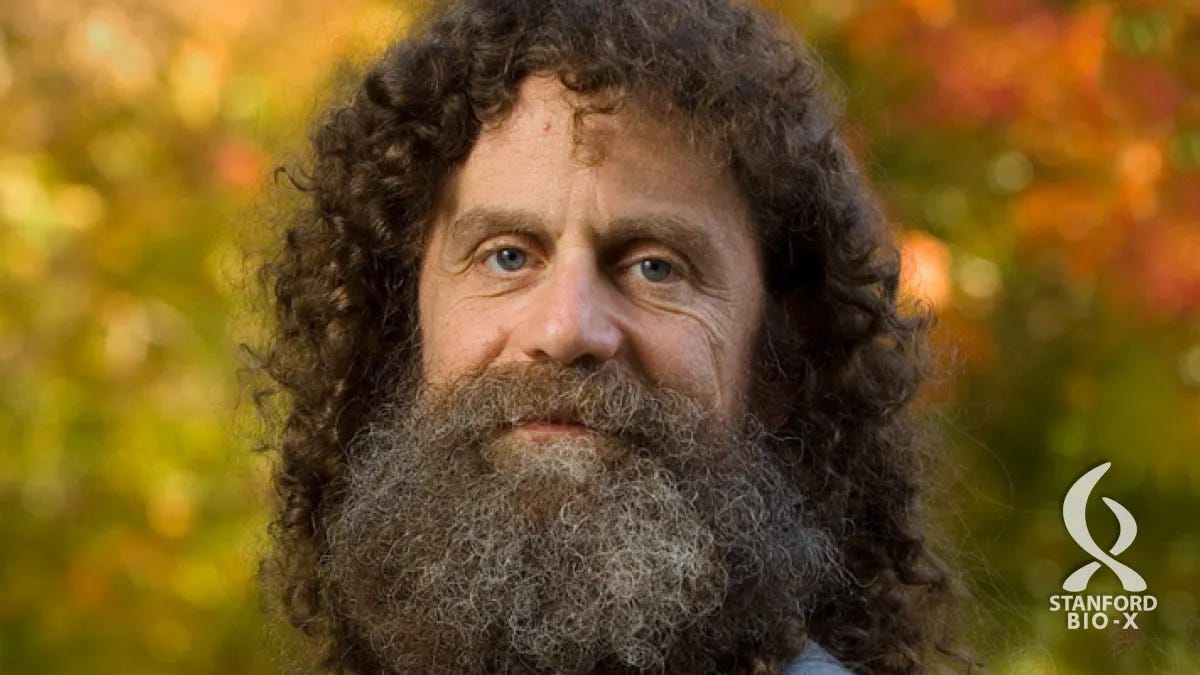
Here’s one of the most famous insights from the famous Stanford neuroscientist, Robert Sapolsky. (I had the chance to hear Sapolsky speak last week, which reminded me how great he is, and that I should really share his work with you):
Zebras flee lions for a 30 second run, then go back to grazing. But humans can worry about imagined lions for 30 years.
And doing this has terrible impacts on our physical and psychological health. As Sapolsky explains: “If a lion is chasing you, and your blood pressure is 180 over 120, you’re not suffering from high blood pressure: you’re saving your life. On the other hand, if your blood pressure is 180 over 120 every time you’re stuck in traffic or you picked the slow line at the grocery store, you’re not saving your life: you’re suffering from stress-induced hypertension. And if you do that chronically enough, you’re going to damage your cardiovascular system. You’ll be more at risk for cardiovascular disease than if you smoke, than if you are overweight, than if you have elevated cholesterol levels.”
This “imagined lion” habit is stubborn because it feels as if you’re doing the responsible thing by worrying about lions. It feels as if vigilance equals care.
The answer is to teach your nervous system the difference between care and alarm.
Here are eight ways to do this: